आज के समय में सबसे ज़्यादा पूछा जाने वाला सवाल यही है:➡️“EV लेना सस्ता है या Petrol Vehicle?”
इस blog में हम real example + real calculation के साथ समझेंगे कि EV और Petrol गाड़ी चलाने में कितना फर्क पड़ता है।

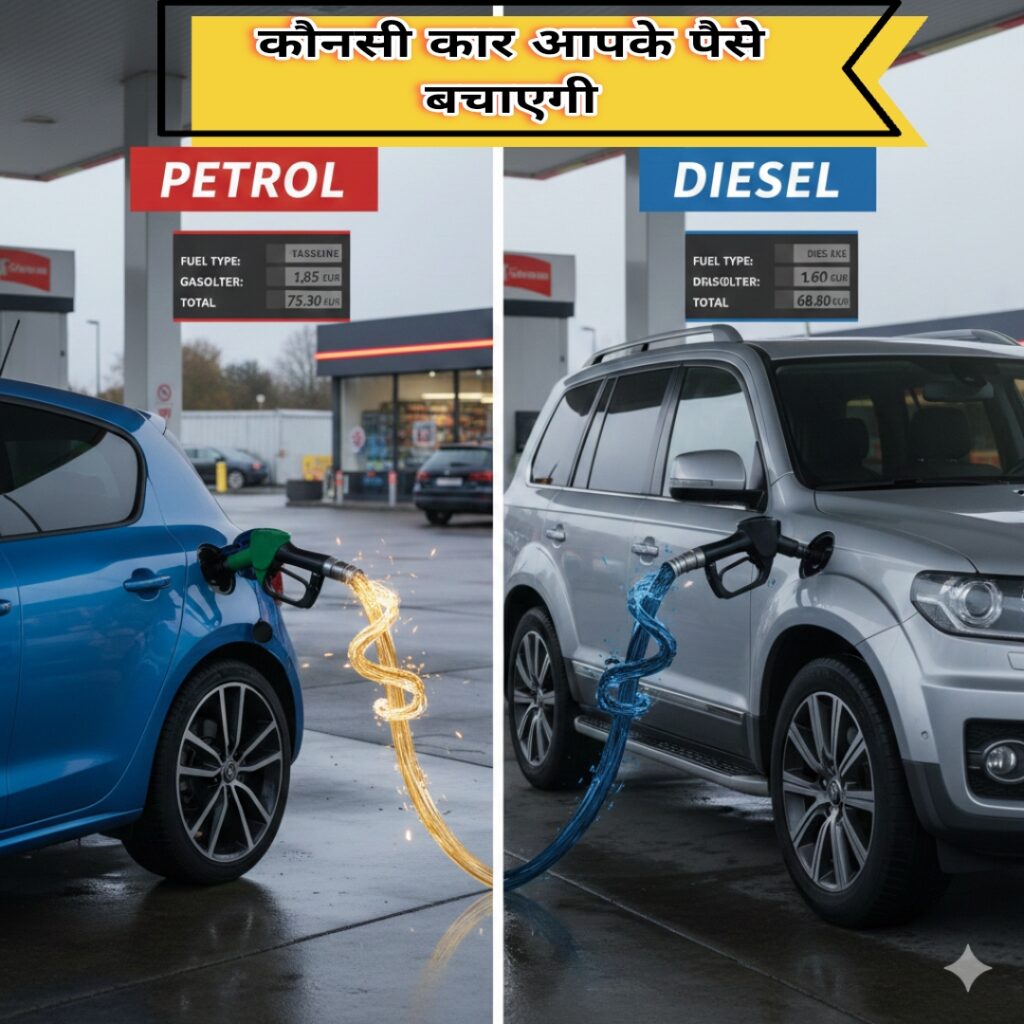
Example Vehicle (Real Life Comparison)
| ◾Vehicle Type | ◾Model Example |
| 🔋 EV Car | Tata Nexon EV |
| ⛽ Petrol Car | Tata Nexon Petrol |
👉 दोनों Same Segment की गाड़ियाँ हैं, इसलिए comparison fair रहेगा।
🔷 EV Running Cost – Real Calculation
Charging Cost (Home Charging)
◾1 यूनिट बिजली की कीमत: ₹8
◾2 Nexon EV बैटरी: 30 kWh
◾3 Full charge cost:👉 30 × 8 = ₹240
Real Range
◾Real world range: 260 km
EV Cost Per KM
₹240 ÷ 260 = ₹0.92 per km (लगभग ₹1/km)
🔷 Petrol Running Cost – Real Calculation
Petrol Price (Average India)
◾Petrol price: ₹105 / litre
Real Mileage
◾City mileage: 14 km/litre
Petrol Cost Per KM
₹105 ÷ 14 = ₹7.5 per km
♦️ EV vs Petrol Running Cost
| Comparison | EV | Petrol |
| Engine oil | ❌ नहीं | ✅ ₹3,000 |
| Gear oil | ❌ नही | ✅ |
| Clutch | ❌ नहीं | ✅ |
| Service cost/year | ₹4,000 -₹6,000 | ₹10,000–₹15,000 |
EV में 60–70% कम maintenance आता है।
5 साल में Total Saving (Real Estimate)
| ◾ Vehicle | ◾5 Year Running Cost |
| EV | ₹90,000 |
| Petrol | ₹6,75,000 |
Total Saving = ₹5.8 लाख (Approx)
EV कब BEST Choice है?
✔ Daily running 30–50 km
✔ Home charging available
✔ City usage ज्यादा
✔ Long-term saving चाहिए
Petrol कब best हैं
✔ Long highway trips
✔ Charging infra नहीं
✔ Budget कम है
Final Verdict ➡️अगर आप रोज़ गाड़ी चलाते हो और पेट्रोल के बढ़ते दामों से परेशान हो,तो EV सिर्फ environment के लिए नहीं — आपके pocket के लिए भी best है।
FAQ
- फ्यूल vs चार्जिंग का खर्च 5 साल में?
Ans: 40km रोज चलें तो: Petrol ~₹5 लाख, EV ~₹1 लाख। EV से ₹4 लाख बचत।
- मेंटेनेंस किसमें सस्ता?
Ans Petrol: ₹60k-1 लाख/5 साल। EV: ₹15k-30k/5 साल। EV की सर्विस 70% सस्ती।
- बैटरी 5 साल में खराब तो?
Ans:8 साल वारंटी मिलती है। 5 साल में बदलनी नहीं पड़ती। बदलना पड़े तो ₹4-7 लाख, पर कीमतें गिर रही हैं।
- 5 साल बाद कौन सी बेचने में फायदे में?
Ans: Petrol: कीमत 50% रह जाती है। EV: 35-45% अभी, मार्केट नया है। ज्यादा चलाते हो तो EV सस्ता पड़ेगा।
अन्य पढ़े
Second Hand Car Buying Tips in Hindi – पहली बार कार लेने वालों के लिए
Second Hand Car Buying Tips in Hindi – पहली बार कार लेने वालों के लिए
Suzuki Access EV चार्जिंग टाइम और बैटरी डिटेल्स